Understanding Enlarged Prostate and Your Treatment Options
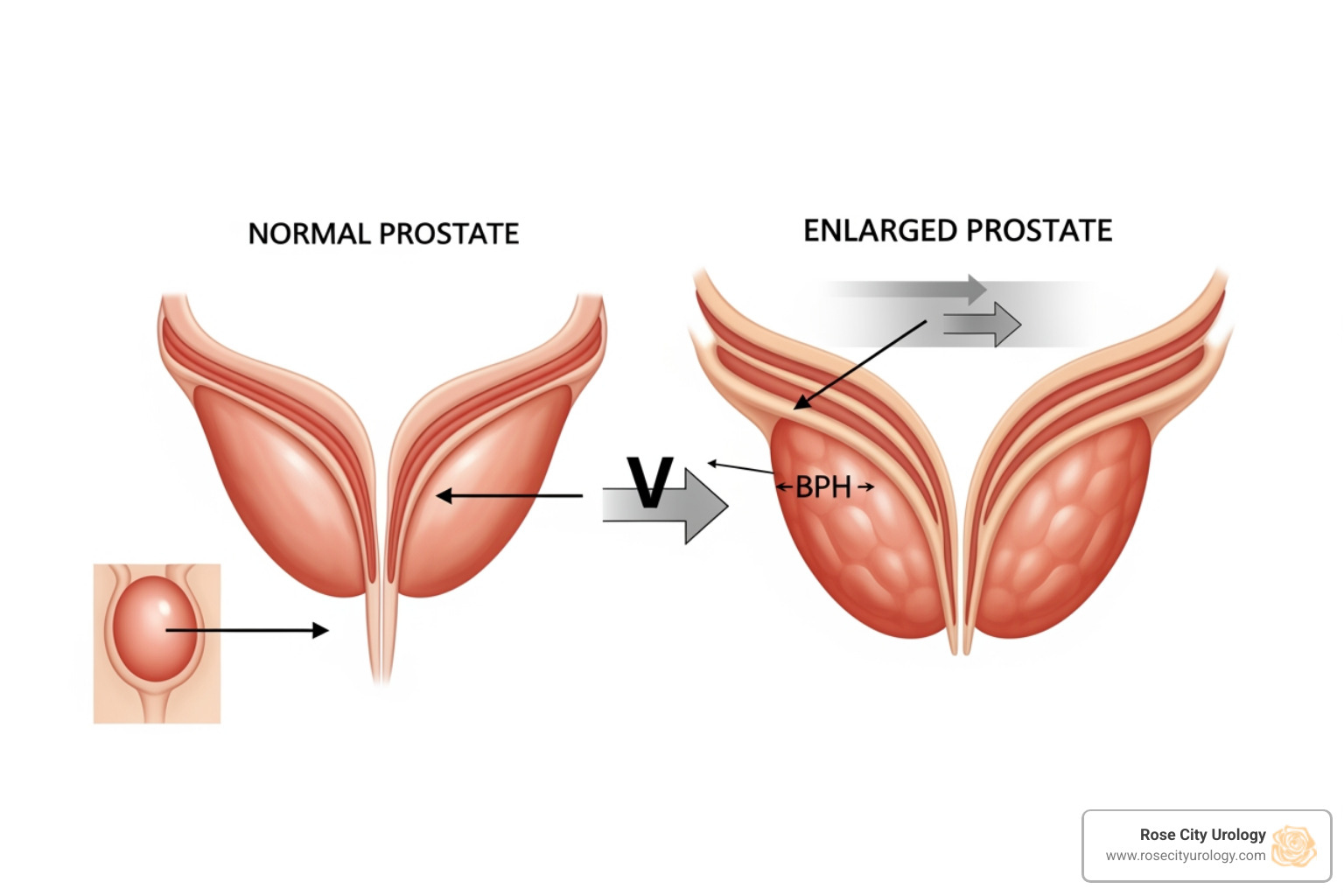
Enlarged prostate treatment includes lifestyle changes, medications, minimally invasive procedures, and surgery. The best approach depends on your symptoms, prostate size, and health.
Quick Overview of Treatment Options:
- Watchful Waiting - Monitor mild symptoms.
- Medications - Alpha-blockers and 5-alpha reductase inhibitors.
- Minimally Invasive Procedures - UroLift, Rezūm, and Aquablation.
- Surgical Options - TURP, laser therapy, and prostatectomy.
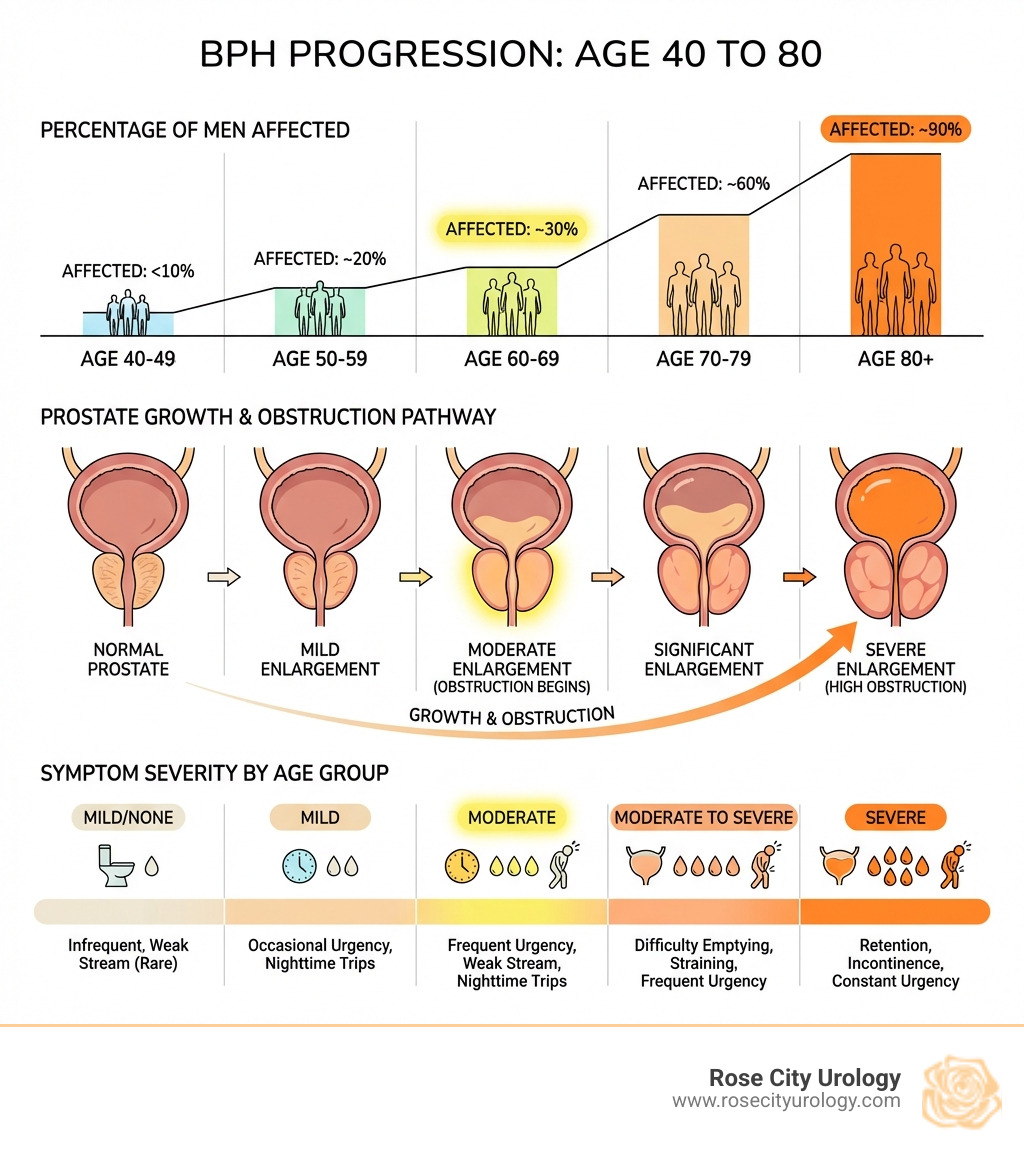
Benign prostatic hyperplasia (BPH) affects about 30% of men by age 60 and 90% by age 80. It is a natural enlargement of the prostate that can obstruct the urethra, making urination difficult.
Today's treatment landscape offers many solutions for frequent nighttime trips, weak streams, or incomplete emptying. As Dr. Ryan Tubre, a board-certified urologist, I help patients steer these options to restore their quality of life.
Understanding BPH: Symptoms and When to Seek Medical Advice
Benign prostatic hyperplasia (BPH) is common as men age. The growing prostate puts pressure on the urethra, leading to several urinary symptoms.
Common Symptoms:
- Weak Urine Stream: Hesitant or less forceful flow.
- Nocturia: Frequent nighttime urination.
- Urinary Urgency: A sudden, strong urge to go.
- Frequent Urination: Needing to go more often during the day.
- Incomplete Emptying: Feeling like the bladder isn't empty.
- Dribbling: Occurring after finishing urination.
- Difficulty Starting: Effort required to begin the flow.
When to see a doctor:
Seek medical advice if symptoms become bothersome. However, certain signs require urgent attention:
- Blood in your pee: Pink, red, or brown urine.
- Pain when peeing: May indicate infection.
- Inability to pee: Acute urinary retention requires immediate help.
If you cannot urinate, call 111 or get help from 111 online. Untreated BPH can lead to UTIs, bladder stones, or kidney damage. Explore more on Men's Urologic Health.
Diagnostic Methods for Enlarged Prostate Treatment
At Rose City Urology in Tyler, TX, we use a comprehensive diagnostic process to identify BPH and rule out other conditions.
- Medical History: We use the International Prostate Symptom Score (IPSS) to quantify symptom severity.
- Physical Exam: A digital rectal exam (DRE) allows the doctor to check the prostate's size and consistency.
- Urinalysis: A urine test to rule out infection.
- Blood Tests:
- PSA Test: Measures Prostate-Specific Antigen levels.
- Kidney Function Test: Checks overall kidney health.
- Post-Void Residual (PVR): Measures urine remaining in the bladder after voiding.
- Uroflowmetry: Measures the speed and volume of urine flow.
- Voiding Diary: A 24-hour record of fluid intake and urination.
Advanced Testing:
- Transrectal Ultrasound (TRUS): Creates an image of the prostate.
- Prostate Biopsy: Performed if cancer is suspected.
- Urodynamic Studies: Measures bladder pressure and flow.
- Cystoscopy: Direct visualization of the urethra and bladder.
Learn more on our Understanding Urology page or via Mayo Clinic's BPH information.
Non-Surgical and Medication-Based Enlarged Prostate Treatment
For mild to moderate symptoms, we often start with non-surgical approaches like watchful waiting, lifestyle changes, or medication.
Watchful Waiting and Lifestyle Modifications
About 40% of men see symptom improvement without active medical intervention. Recommended lifestyle changes include:
- Fluid Management: Limit fluids before bedtime.
- Double Voiding: Wait a moment after urinating and try again.
- Pelvic Floor Exercises: Can improve bladder control.
- Avoid Certain Meds: Decongestants can worsen symptoms.
- Stay Active: Maintaining a healthy weight supports prostate health.
Medication Mechanisms and Efficacy
Medications typically take one to eight weeks to show results. Common types include:
- Alpha-blockers (e.g., Tamsulosin): Relax prostate muscles for quicker flow improvement (2-3 weeks). Side effects include dizziness or retrograde ejaculation.
- 5-alpha reductase inhibitors (e.g., Finasteride): Shrink the prostate over 6 months. They are best for larger glands but may affect sex drive.
- PDE5 Inhibitors (e.g., Tadalafil): Can treat both BPH and erectile dysfunction.
- Combination Therapy: Often the most effective for severe symptoms.
Refer to the AUA Clinical Guidelines on BPH Medication for more details.
| Medication Type | How It Works | Onset | Benefit | Side Effects |
|---|
| Alpha-blockers | Relaxes muscles | 2-3 weeks | Quick relief | Dizziness, fatigue |
| 5-ARIs | Shrinks prostate | ~6 months | Reduces size | Reduced libido |
| PDE5 Inhibitors | Relaxes bladder neck | Variable | BPH & ED relief | Headache, flushing |
Learn more at Enlarged Prostate Treatments.
Dietary Recommendations
- Eat: Fruits, vegetables (Mediterranean diet), healthy fats, zinc, and lycopene (cooked tomatoes).
- Limit: Processed sugars, caffeine, alcohol, and excessive red meat.
Minimally Invasive and Surgical Enlarged Prostate Treatment Options
When medications aren't enough, minimally invasive surgical therapies (MIST) or traditional surgery can restore urine flow.
Minimally Invasive Surgical Therapies (MIST)
MISTs offer rapid recovery and often preserve sexual function. Explore BPH Treatments for more details.
- UroLift Systems: Small implants hold prostate tissue away from the urethra. It involves no cutting or heating. See UroLift Systems.
- Rezūm™ Water Vapor Therapy: Uses steam to remove obstructive tissue. It is a quick in-office procedure. Learn about Rezūm™ Water Vapor Therapy.
- Aquablation Therapy: A robotically-controlled waterjet removes tissue precisely without heat. See Aquablation Therapy Robotic.
- iTind: A temporary device that reshapes the urethra over 5-7 days.
- PAE: An interventional radiologist blocks blood flow to the prostate to shrink it.
Advanced Surgical Procedures
- TURP: The "gold standard." A resectoscope removes tissue through the urethra. It is highly effective but has a higher risk of retrograde ejaculation.
- GreenLight Laser: Vaporizes tissue with a laser. It has a lower bleeding risk than TURP. See GreenLight Laser BPH Treatment.
- HoLEP: Uses a laser to enucleate the entire obstructive portion of the prostate. It is effective for any prostate size.
- Simple Prostatectomy: For very large glands, the inner prostate is removed via Robotic Surgery.
Side Effects: Potential risks include sexual dysfunction, temporary urgency, or infection. We discuss these thoroughly to ensure the best benefit-to-risk ratio.
Frequently Asked Questions about BPH
Can an enlarged prostate be cured?
BPH is a progressive condition, so there isn't a "cure" that prevents all future growth. However, treatments are highly effective at managing symptoms and restoring quality of life. Regular monitoring helps confirm that your treatment is still working and that no new issues (like infection, bladder stones, or urinary retention) are developing.
If symptoms return over time, that does not mean treatment failed, it may simply mean the prostate has continued to grow. In that situation, your urologist may adjust medications, revisit lifestyle factors, or recommend a minimally invasive procedure or surgery to restore flow.
What is the best treatment?
There is no single "best" option. We determine the right path based on:
- Symptom Severity: How much it impacts your life.
- Prostate Size: Some treatments work better for specific sizes.
- Health & Age: Older adults or those with other medical issues may prefer lower-risk options.
- Goals: Whether you prioritize symptom relief, reducing long-term progression, or preserving sexual function.
In general, many men start with lifestyle changes and medication. If symptoms remain bothersome, minimally invasive therapies can provide meaningful relief with shorter recovery than traditional surgery. For very large prostates or significant obstruction, procedures like HoLEP, TURP, GreenLight Laser, or (in select cases) simple prostatectomy may provide the most durable improvement.
How do I know when it's time to move beyond lifestyle changes?
Consider scheduling an evaluation if:
- You are waking up multiple times at night to urinate and it affects sleep.
- You have a weak stream, straining, or stop-and-start urination.
- You feel you cannot empty your bladder.
- Symptoms are interfering with work, travel, or daily activities.
- You have had urinary retention, recurrent UTIs, bladder stones, or abnormal kidney function tests.
Many patients use the IPSS symptom score to track how symptoms change over time. If the score worsens or quality of life drops, it is often a good time to reassess the plan.
Will treatment affect sex life or ejaculation?
Potential effects depend on the option chosen.
- Some medications (especially alpha-blockers) can cause retrograde ejaculation.
- Certain procedures are designed to better preserve ejaculation (for appropriate candidates), while traditional surgeries like TURP more commonly affect ejaculation.
- Erectile function is often preserved, and tadalafil may help both urinary symptoms and erections for some men.
Because priorities vary, we review expected benefits and sexual side effects before you choose a treatment.
Are there alternative therapies?
Supplements like Saw Palmetto, Beta-sitosterol, and Pygeum are popular but not FDA-approved for BPH. Clinical studies have generally shown no significant benefit over placebos. Supplements can also interact with prescriptions or affect bleeding risk around procedures.
If you want to try supplements, discuss them with your urologist so you can do so safely and still monitor symptoms appropriately.
What can I do at home while I wait for my appointment?
While you are arranging evaluation or treatment, these steps may reduce symptom flare-ups for some men:
- Limit fluids for 2-3 hours before bed to reduce nocturia.
- Reduce bladder irritants such as caffeine and alcohol.
- Review over-the-counter cold medications, as decongestants can worsen urinary symptoms.
- Practice double voiding to improve bladder emptying.
- Keep a short voiding diary (times, volumes if possible, and fluid intake) to bring to your visit.
Conclusion
Navigating enlarged prostate treatment can feel overwhelming, but you don't have to do it alone. At Rose City Urology in Tyler, Texas, we are committed to providing expert, patient-centered care, utilizing advanced technology in a supportive environment. Our team, led by Dr. Ryan Tubre, is dedicated to helping you understand your options and find the most effective path to relief.
Whether you're exploring watchful waiting, considering medication, or looking into advanced minimally invasive or surgical procedures, we're here to guide you every step of the way. We believe in empowering our patients with knowledge, so you can make informed decisions about your health and reclaim your quality of life.
If you're experiencing symptoms of an enlarged prostate and are ready to explore your enlarged prostate treatment options, please don't hesitate to reach out.
Contact Us for a Consultation or Schedule your BPH Treatment evaluation today. We look forward to helping you.


